Homemade Doner Kebab Meat…
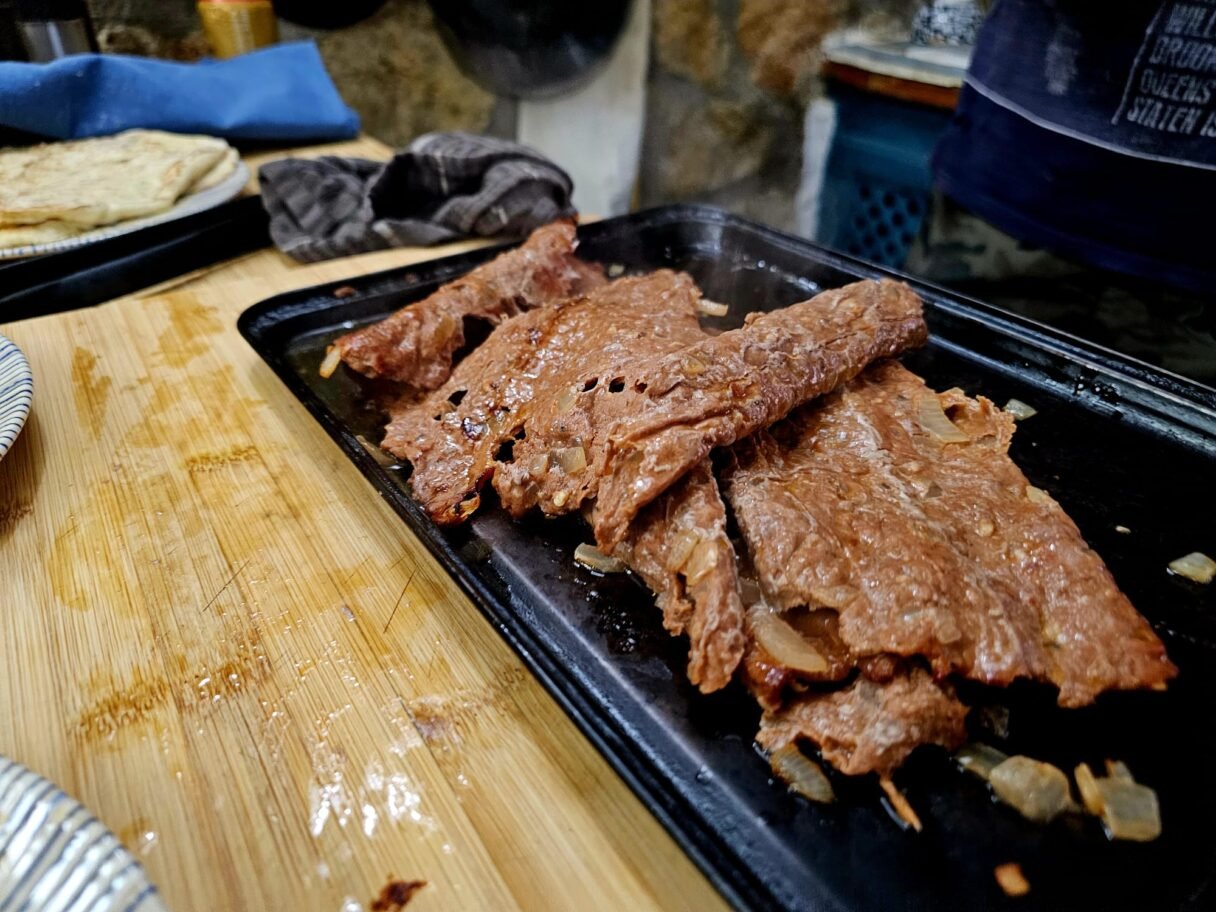
The Viral Recipe That Actually Works
If you’ve spent any time online recently, you’ve probably encountered one of the latest incarnations of the homemade doner kebab.
The basic idea is wonderfully straightforward… take minced beef, season it properly, roll it thinly between sheets of parchment, bake it and then tear the cooked meat into pieces before wrapping it in flatbread.
It sounds almost too simple.
It isn’t.
The clever part is the way the meat is handled. Instead of baking the mixture as one thick loaf, it is divided into portions, rolled out thinly and then rolled back into compact parcels. Once baked, the meat is torn apart, producing irregular pieces with plenty of edges and surfaces to catch the heat.
The result isn’t identical to meat shaved from a traditional vertical doner spit, but it gets remarkably close to the flavour and texture we’re after… without having to install a kebab shop in the kitchen.
Homemade Doner-Style Beef Kebab
Serves 4
Ingredients
Doner meat
- 450g ground beef, ideally around 15% fat
- 1 medium onion
- 2 cloves garlic
- 1 tablespoon tomato paste
- 2 tablespoons Greek yoghurt
- 1 teaspoon ground cumin
- 1 teaspoon paprika
- ¼ teaspoon red pepper flakes, optional
- 1 teaspoon salt
- ½ teaspoon black pepper
Roasted vegetables
- 3 medium tomatoes, quartered
- 2 green peppers
- 1 tablespoon olive oil
- ¼ teaspoon salt
- ⅛ teaspoon black pepper
Tomato-butter sauce
- 4 tablespoons unsalted butter
- 2 tablespoons tomato paste
- 60ml hot water
- ¼ teaspoon salt
To serve
- 4 lavash or pita breads
- Sumac onions, optional
Method
1. Prepare the meat
Preheat your oven to 200°C.
Put the onion and garlic into a food processor and pulse until very finely chopped.
Transfer to a large bowl and add the beef, tomato paste, Greek yoghurt, cumin, paprika, chilli flakes, salt and black pepper.
Mix thoroughly with clean hands until everything is evenly incorporated.
2. Roll the meat
Divide the mixture into three equal portions.
Place one portion between two large sheets of baking parchment. Roll it out into an even rectangle.
Remove the top sheet of parchment.
Starting at the short end nearest you, roll the meat back onto itself in roughly 5cm increments. The parchment will help you keep everything together.
Transfer the parcel to a large baking tray and repeat with the other two portions.
3. Add the vegetables
Place the tomatoes and green peppers on the same tray.
Drizzle them with olive oil and season with salt and black pepper.
4. Bake
Bake everything for approximately 20 minutes, until the meat is cooked through and the vegetables have softened and begun to colour.
Carefully unwrap the meat parcels.
Now comes the important bit… tear the meat into large, irregular pieces.
Don’t slice it into neat strips. The irregular pieces give you more edges and a much more convincing kebab texture.
5. Make the sauce
While the meat cooks, melt the butter in a small saucepan over medium heat.
Add the tomato paste and hot water and stir until smooth.
Season with salt and bring briefly to a boil.
Remove from the heat.
6. Build your kebab
Lay a piece of lavash or pita on a board.
Spread over a spoonful of the tomato-butter sauce.
Add a generous handful of doner-style beef, followed by some of the roasted tomato and green pepper.
Add sumac onions if you’re using them, then drizzle with a little more sauce.
Roll firmly from the bottom, tucking the filling in as you go.
Cut in half and serve immediately.
Why this method works
The recipe is really a lesson in surface area.
Traditional doner meat is constantly exposed to heat on the outside of the rotating spit. The cooked surface is shaved away, revealing another layer underneath.
We’re obviously not recreating that process in a conventional oven.
Instead, the thin rolled portions and irregular tearing give the meat plenty of exposed surfaces. Some pieces remain juicy while others develop darker, more intensely flavoured edges.
That contrast is what makes the finished kebab much more interesting than simply baking a block of seasoned mince.
A few useful tips
Use beef with some fat in it. Around 15% fat is a good starting point. Very lean mince is likely to produce a drier result.
Don’t make the meat parcels too thin. Some versions divide the mixture into four portions, but three produces slightly thicker pieces and, in testing, a better texture.
Keep the vegetables on the same tray. They’ll pick up some of the flavour from the cooking meat, while the roasted tomatoes provide a lovely contrast to the beef.
Make the sumac onions. They’re optional, but the acidity and sharpness work brilliantly against the richness of the meat and sauce.
Eat it fresh. That’s when the texture is at its best.
Can you store it?
Yes.
If you know you’re going to have leftovers, store the meat, vegetables, sauce and bread separately in airtight containers.
The cooked components should keep in the refrigerator for around 3–4 days.
Assembled wraps are better eaten within a day or two, as the bread will gradually absorb the moisture from the filling.
For reheating, use a low oven, around 150°C, until warmed through. You can also briefly reheat the meat separately before assembling a fresh wrap.
The Foodie Scribbles verdict
Is this authentic doner?
Not quite… and anyone who tells you otherwise is probably selling something.
Traditional doner is cooked on a vertical rotating spit and shaved from the outside as it cooks. This recipe is a home kitchen approximation.
But that’s not really the point.
The point is that you can take ordinary supermarket ingredients, spend relatively little time preparing them and end up with something that is recognisably, gloriously kebab-like.
And unlike the kebab you might normally acquire at an hour when respectable people are asleep, you get to know exactly what went into it.
Which is probably a useful thing to know before you put it in your mouth.
Foodie Scribbles rating… absolutely worth trying.

🍞 TELL ME YOUR FOOD STORY
If you’re an independent food producer, baker, farmer, market trader, cook, grower or food business with a story worth telling, I’d like to hear it.
No charge. No advertising package. No catch.
Just email me at dominus@foodiescribbles.com
Then:

🥕 FOLLOW FOODIE SCRIBBLES
Come along for the journey as we discover the real people, local produce and independent food businesses behind the food we eat.

Related Posts